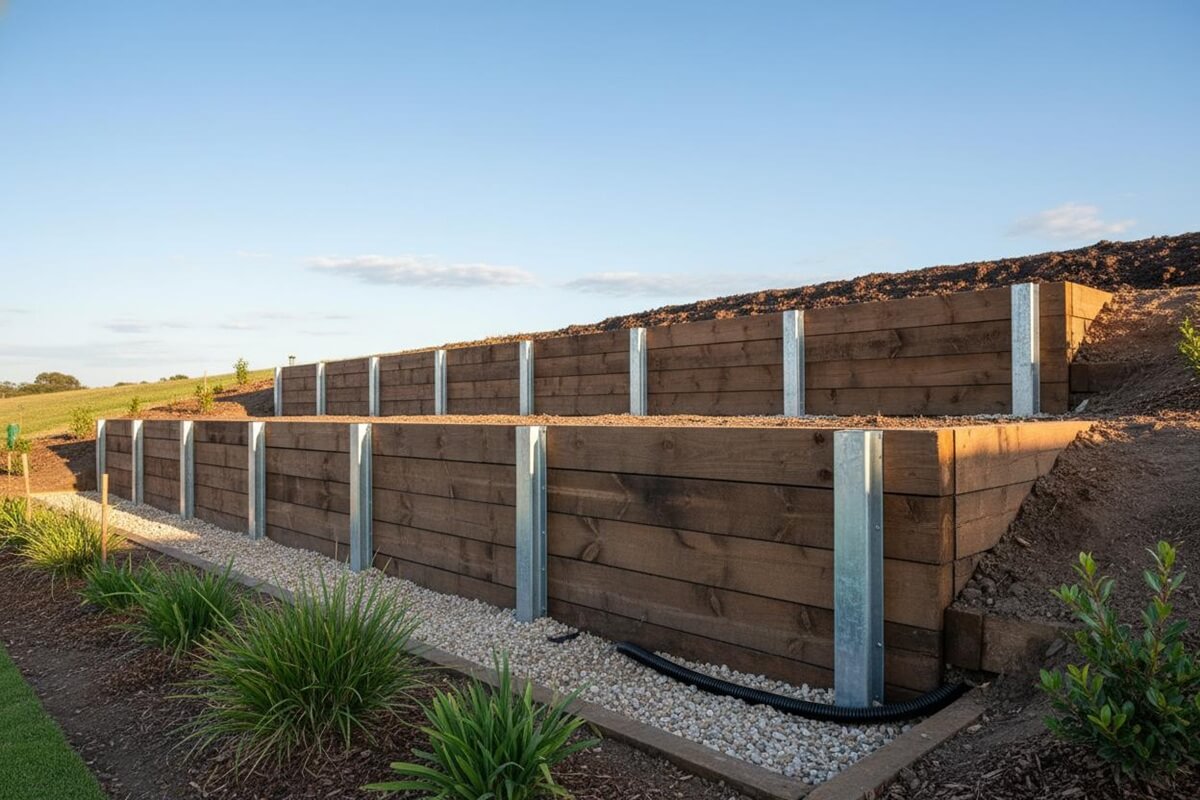
 Sleeper retaining walls are one of the most practical and widely used solutions for managing changes in ground level across residential and commercial sites. In Melbourne, where soil conditions can vary significantly from suburb to suburb, the success of a sleeper wall depends heavily on the strength and durability of the steel posts used to support it.
Among the most reliable options available today are galvanised H channel steel posts. These posts form the structural backbone of sleeper retaining walls, providing the strength needed to resist soil pressure while allowing for a clean and efficient installation. This article explores how galvanised H-channel posts are used in sleeper retaining wall systems and why they remain a trusted choice for long-term performance.
Why Steel Posts Are Essential in Sleeper Retaining Walls
While sleepers define the visible face of a retaining wall, the steel posts hidden behind them are what actually hold the structure in place. Steel posts are designed to resist lateral forces from retained soil, water pressure, and ground movement — forces that timber posts often struggle to handle over time.
Steel retaining wall posts provide consistent strength, dimensional stability, and resistance to warping or decay. When used in sleeper walls, they allow sleepers to slot neatly into place, creating a continuous wall that distributes loads evenly across the structure. This system is particularly effective in Melbourne conditions, where reactive clay soils can place unpredictable pressure on retaining walls.
What Makes Galvanised H-Channel Posts Different
H-channel posts are named for their distinctive “H” shape, which allows sleepers to be installed from both sides of the post. This design is ideal for sleeper retaining wall construction, especially where straight alignment and structural efficiency are important.
When these posts are hot-dip galvanised, they receive a protective zinc coating that shields the steel from corrosion. Galvanised steel retaining wall posts are especially important in sleeper wall systems because the posts are partially buried in soil and constantly exposed to moisture.
Key benefits of galvanised H-channel posts include:
- Long-term corrosion resistance
- Minimal maintenance requirements
- Suitability for both timber and concrete sleepers
- Consistent performance in wet or clay-heavy soils
This makes sleeper retaining wall steel posts galvanised systems a reliable solution for both residential gardens and larger landscaping projects.
Designing a Sleeper Retaining Wall with H-Channel Posts
Effective sleeper wall design starts with understanding how loads transfer through the structure. Soil pressure pushes horizontally against the sleepers, which then transfer that load into the steel posts. The posts must be strong enough to resist bending and securely anchored into concrete footings.
Key design considerations include wall height, post spacing, sleeper thickness, and drainage. As wall height increases, so does the pressure exert on the posts. In these cases, larger or heavier H-channel posts may be required to meet structural demands.
Drainage is equally important. Without adequate drainage, water can build up behind the wall, increasing pressure and reducing the lifespan of the structure. Free-draining aggregate, geotextile fabric, and Agi pipes are essential components of any well-designed sleeper retaining wall.
Installation Best Practices for Long-Term Stability
Correct installation plays a major role in the performance of retaining wall steel systems. Even the best materials can fail if installed poorly.
Best-practice installation typically includes:
- Setting posts into concrete footings to the required depth
- Ensuring posts are plumb and correctly spaced before concrete sets
- Installing sleepers tightly within the H-channel flanges
- Backfilling in layers with proper compaction
- Including drainage materials behind the wall
In Melbourne, many councils require engineering approval for retaining walls over one metre in height. Following these practices helps ensure compliance with steel post retaining wall specifications and reduces the risk of movement or failure over time.
Why Galvanised Steel Is Ideal for Melbourne Conditions
Melbourne’s climate presents unique challenges for retaining wall construction. Seasonal rainfall, clay soils, and temperature fluctuations all contribute to ground movement and moisture exposure. In these conditions, untreated steel can corrode rapidly, particularly below ground level.
Galvanised steel posts are specifically designed to withstand these challenges. The zinc coating acts as a sacrificial layer, protecting the underlying steel even if the surface is scratched or damaged during installation. This makes galvanised posts a smart long-term investment for any sleeper retaining wall project in the Melbourne region.
Compared to alternative materials, galvanised steel offers superior durability without the need for ongoing maintenance such as painting or sealing.
Final Thoughts
Designing a reliable sleeper retaining wall requires more than just choosing the right sleepers. The structural integrity of the wall depends on the quality and suitability of the steel posts used. Galvanised H channel steel posts provide the strength, durability, and flexibility needed to create sleeper walls that perform well under Melbourne’s challenging conditions.
By using steel retaining wall posts that are properly galvanised, correctly sized, and professionally installed, you ensure your retaining wall remains stable, compliant, and visually clean for decades. Whether for a small residential garden or a larger landscaping project, galvanised H-channel posts remain one of the most dependable solutions in modern sleeper retaining wall construction.