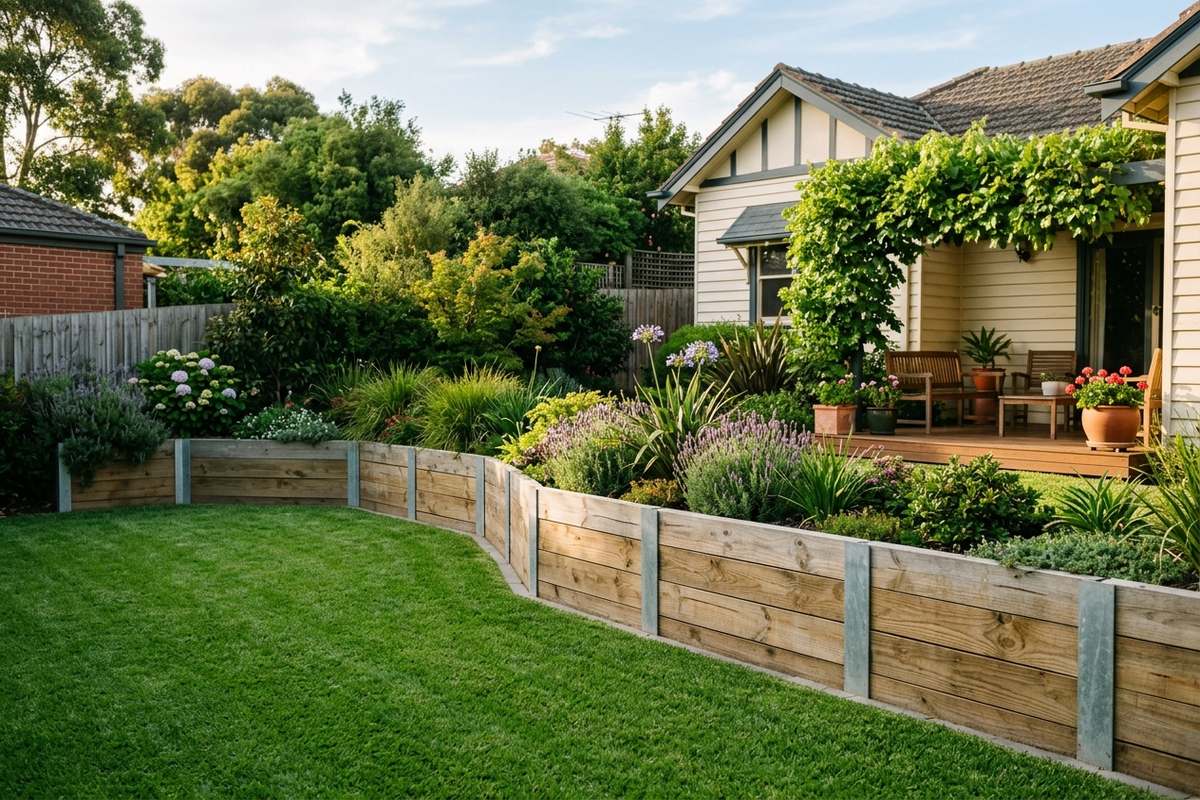
 When it comes to lightweight structural steel for smaller landscaping and building projects, the UB150 section is one of the most practical choices available. Compact, cost-effective, and easy to handle on-site, UB150 beams are widely used across Melbourne and regional Victoria for low retaining walls, garden bed edging, and light structural framing. This guide covers everything you need to know about UB150 specifications, applications, and limitations — so you can make the right decision for your project.
Whether you’re a landscaper, builder, or owner-builder tackling a weekend project, understanding the difference between 150UB14 and 150UB18 will help you choose correctly. For a full overview of our available retaining wall steel products, visit our dedicated product page.
What Does UB150 Mean?
UB stands for Universal Beam — a standard hot-rolled structural section with an I-shaped cross-section. The number “150” refers to the nominal depth of the beam in millimetres. Universal beams are designed primarily to carry bending loads, making them well-suited to applications where vertical or lateral forces need to be efficiently transferred — such as retaining wall posts and floor beams in light construction.
In Australia, UB150 sections come in two common weights: 150UB14 and 150UB18. The suffix number indicates the mass per metre in kilograms — so 150UB14 weighs 14 kg/m and 150UB18 weighs 18 kg/m. This difference in weight reflects a heavier web and flange on the 18 kg/m section, which provides greater load capacity at the expense of a small increase in material cost.
UB150 Section Specifications
Understanding the dimensional properties of each UB150 variant helps you specify the right section for structural calculations and site fitment.
150UB14 specifications:
Depth: ~150 mm | Flange width: ~75 mm | Web thickness: ~5 mm | Flange thickness: ~7 mm | Mass: 14 kg/m
150UB18 specifications:
Depth: ~155 mm | Flange width: ~75 mm | Web thickness: ~6 mm | Flange thickness: ~9.5 mm | Mass: 18 kg/m
Both sections share a similar flange width of approximately 75 mm, which is narrower than deeper sections like the 200UB or UC (Universal Column) sections. This narrower profile makes UB150 beams particularly easy to slot into timber sleeper retaining walls, as sleepers can be cut and fitted snugly into the flanges of the post. Browse our range of concrete and timber sleepers designed for use with steel post systems like these.
Best Uses for UB150 Beams
UB150 sections are ideally suited to applications where loads are modest and ease of handling is a priority. Common uses include:
Low retaining walls under 800 mm: For garden retaining walls shorter than 800 mm in retained height, the 150UB14 or 150UB18 post is generally adequate when spaced at typical 1.2–1.8 m intervals. These walls are common in Melbourne residential gardens where level changes between lawn areas, driveways, and garden beds need to be managed efficiently.
Garden bed edging and landscaping: Victoria’s hilly suburbs — from the Dandenong Ranges through to Melbourne’s inner east — generate constant demand for compact retaining solutions. UB150 posts sit in a sweet spot between price and performance for residential landscaping projects where aesthetics and budget matter.
Light structural framing: In shed construction, mezzanine floors, and carport framing, the 150UB18 is sometimes used as a header beam for modest spans. Always engage a structural engineer for any load-bearing structural application to confirm suitability.
If you’re planning a sleeper retaining wall and want to understand post sizing, footing depths, and construction methodology, read our detailed guide on designing sleeper retaining walls.
Advantages of UB150 Sections
There are several reasons why builders and landscapers regularly reach for UB150 beams on smaller projects:
Lightweight and easy to handle: At 14–18 kg/m, UB150 sections can be cut and moved by two people without mechanical lifting equipment. On typical residential projects where access is tight — think inner-Melbourne backyards with no vehicle access — this is a genuine advantage. A 2.4 m post in 150UB18 weighs only around 43 kg, manageable for a small crew.
Cost-effective for smaller projects: Material costs for UB150 sections are lower than heavier UC sections or deeper UB sections. When a project only requires a modest post depth and lateral soil load capacity, there’s no engineering or financial benefit in over-specifying with a 200UC or 250UB.
Available in galvanised finish: For outdoor and in-ground retaining wall applications in Melbourne’s variable climate, galvanised UB150 sections offer reliable corrosion resistance without the premium cost of stainless steel. Galvanising protects the steel in-ground and above ground, extending the service life of the post to 30+ years in typical soil conditions.
Limitations: When to Upgrade to 200UB or UC Sections
The UB150 has clear limitations that must be understood before specifying it for a retaining wall project. The most important limitation is wall height.
Not suitable for walls over 1 metre retained height: As retained height increases, bending moments on retaining wall posts increase rapidly (roughly with the square of height). A UB150 post that performs well for a 700 mm wall will be severely under-specified for a 1.2 m wall. For taller retaining walls, you need sections with greater section modulus — typically 200UB or UC sections. Our guide on UC sections for retaining walls covers the sizing rationale in detail.
Narrow flange limits sleeper fitment options: The 75 mm flange width of UB150 sections means that full-depth 200 mm sleepers will protrude significantly from the face of the post. This can be acceptable aesthetically for many garden wall applications, but if you require a flush or near-flush finish, a wider-flanged UC section may be more appropriate.
Footing depth and spacing matter: Even with a lightweight section like UB150, retaining wall performance is heavily dependent on adequate footing depth (typically 600–900 mm in stable soil for a 700 mm wall) and post spacing. Always check with a structural engineer or refer to your local council guidelines before proceeding.
Tips for Sleeper Retaining Walls Using UB150 Posts
Sleeper retaining walls using steel H-post sections are the dominant approach for residential retaining in Melbourne’s suburbs. Here are some practical tips when using UB150 posts:
Keep wall height under 800 mm retained for UB150 posts to stay within safe working limits. Dig post footings to a depth of at least 600 mm — deeper for softer soils or where surcharge loads (driveways, heavy vehicles) are present. Use 75 mm-wide posts to match the UB150 flange width when cutting sleepers to length, and check that sleepers fit cleanly into the flange channel before concreting posts in place. Backfill drainage material (crushed rock) behind the wall to reduce hydrostatic pressure. If in doubt about wall height or loading, step up to a 200UB or UC section from the outset — it’s far cheaper to over-specify the steel than to rebuild a failed wall.
Order UB150 Steel Sections in Melbourne
RW Steel Victoria supplies UB150 sections in both 150UB14 and 150UB18, available cut to length and with galvanised or mill-finish options. We service Melbourne metro, the Mornington Peninsula, Geelong, and regional Victoria. See examples of completed retaining wall projects in our completed project gallery.
Ready to get started? Get a quote online or contact RW Steel Victoria directly — our team can help you specify the right section size and quantity for your project.