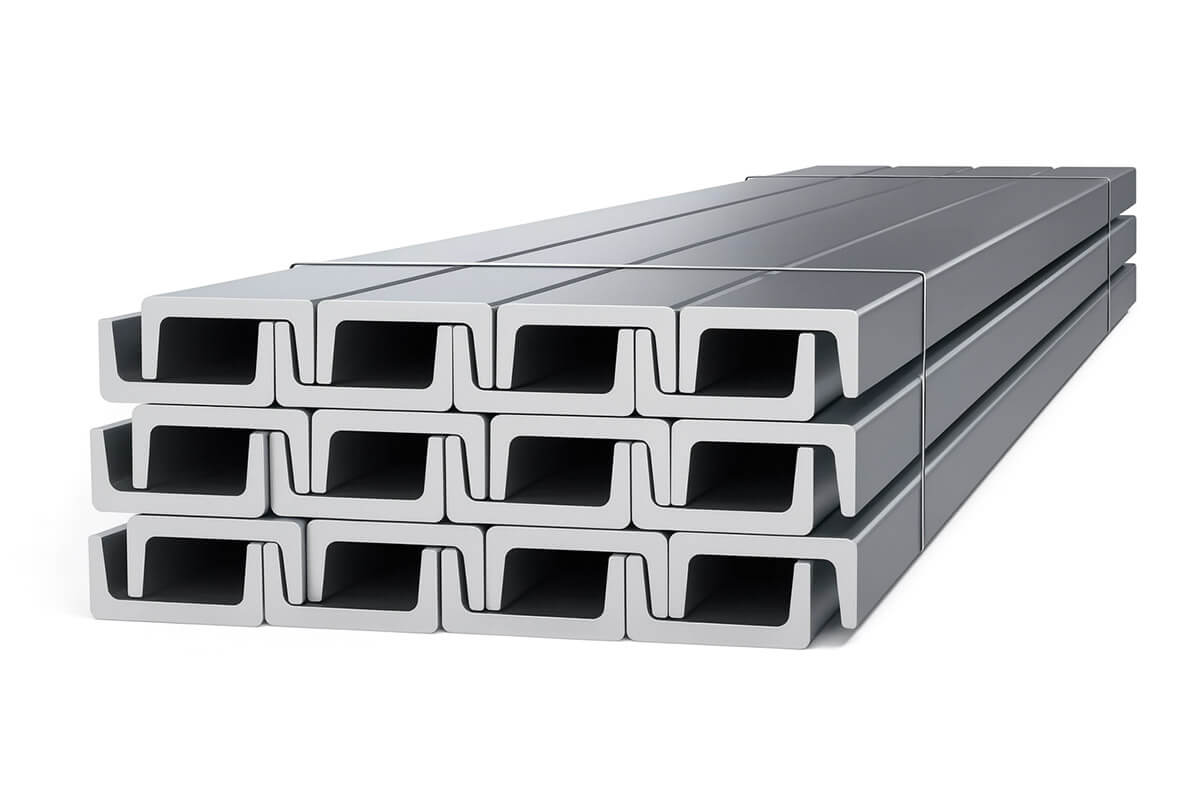
 When it comes to structural steel, most people are familiar with Universal Beams (UBs) and Universal Columns (UCs). But one profile that often flies under the radar — yet plays a vital role in construction and landscaping — is the Parallel Flange Channel, or PFC.
In Australia, PFCs are used in everything from retaining walls and lintels to portal frames and bracing systems. Their compact yet strong design makes them perfect for transferring loads, adding rigidity, and providing lateral support. In this article, we’ll explore how 100PFC, 150PFC, and 200PFC22.9 sections contribute to structural stability, when to use them, and why they’re indispensable in modern steelwork.
What Is a PFC and How Does It Work?
A Parallel Flange Channel (PFC) is a hot-rolled steel section shaped like a squared “C”. The two parallel flanges and central web make it extremely efficient at resisting bending and compression forces.
Unlike Universal Beams (which have wider flanges), PFCs are more compact and versatile — allowing them to fit neatly into tight or irregular spaces. They’re often used in conjunction with UCs or UBs to create fully integrated systems that balance vertical and horizontal loads.
Typical uses include:
- Retaining wall lintels or base channels.
- Supporting sleepers between steel posts.
- Bracing for sheds, frames, and small bridges.
- Edge beams for platforms and floors.
Because of their design flexibility, PFC beams are a go-to choice for engineers and builders seeking efficiency without compromising on strength.
Comparing 100PFC, 150PFC, and 200PFC22.9
Just like UC and UB sections, each PFC size is defined by its depth and weight per metre. Let’s break down three common examples used in Australian construction:
100PFC — Compact Strength
This smaller section is ideal for light-duty applications such as garden walls, edging, or small lintels.
- Depth: 100 mm
- Weight: 8.3 kg per metre
- Best for: Compact retaining walls under 1 metre high or lighter structural frames.
- Advantages: Easy to handle, cost-effective, and perfect for residential or DIY installations.
150PFC — Balanced Performance
Stepping up in strength, 150PFC offers a balance between flexibility and load capacity.
- Depth: 150 mm
- Weight: Around 17 kg per metre
- Best for: Standard retaining wall bracing, mid-range structural beams, or lintel supports.
- Advantages: Stronger than 100PFC but still manageable for on-site handling; ideal for general construction.
200PFC22.9 — Heavy-Duty Stability
For projects requiring maximum performance, 200PFC22.9 provides robust structural integrity.
- Depth: 200 mm
- Weight: 9 kg per metre
- Best for: Large retaining walls, heavy framing systems, or commercial builds.
- Advantages: Excellent resistance to bending and buckling; often used in engineered retaining wall designs or long-span frames.
By choosing the correct size, you can ensure that your PFC beam supports the required loads safely and efficiently — whether in a retaining wall or a full steel framework.
Why PFCs Are Ideal for Retaining Walls
When integrated with Universal Columns (UCs) and galvanised steel posts, PFCs play a critical role in reinforcing retaining walls. Their flat, parallel flanges provide an ideal channel for supporting sleepers or cross-members, adding horizontal strength and stability to the structure.
Key advantages include:
- Ease of alignment – PFCs fit seamlessly with other steel sections for clean, square connections.
- Structural support – They act as lintels or base rails, distributing weight evenly across the wall.
- Compact design – Perfect for confined areas where larger beams can’t fit.
- Durability – When hot-dip galvanised, PFCs resist corrosion for decades in outdoor conditions.
For example, pairing 100PFC or 150PFC with 150UC30 posts can create a durable retaining wall system that’s suitable for Melbourne’s challenging soil conditions — from sandy bayside areas to clay-heavy suburbs.
Galvanisation and Australian Conditions
In outdoor applications, galvanisation is non-negotiable. Retaining wall steel is constantly exposed to moisture, and untreated sections can corrode quickly. Hot-dip galvanised PFCs offer the best protection, forming a long-lasting zinc coating that prevents rust and extends the beam’s lifespan.
Benefits of using galvanised PFCs include:
- Long-term performance – Typically 30–50 years of protection in most environments.
- Reduced maintenance – No need for regular painting or coating.
- Compatibility – Works perfectly with galvanised UCs, UBs, and posts.
In Melbourne’s coastal or humid regions, galvanised PFCs are essential. They ensure your retaining wall or framing system remains solid and safe for years, even in corrosive or damp environments.
Engineering and Installation Insights
Even though PFCs are straightforward to install, proper engineering guidance is vital for safety and compliance. Here’s what to keep in mind:
- Load calculations – Always confirm that your chosen PFC section meets the structural load requirements for your wall height and soil pressure.
- Post spacing – The larger the PFC, the wider you can space posts, but only with proper engineering approval.
- Drainage – Use scoria backfill and Agi pipes to prevent water pressure build-up behind retaining walls.
- Footings – Concrete footing depth should be at least one-third of wall height for maximum stability.
- Compliance – Ensure all steel sections meet AS/NZS 3679.1 standards and are supplied by certified Australian manufacturers.
Following these practices ensures your wall not only looks good but also meets performance and safety requirements under local building codes.
Final Thoughts
Parallel Flange Channels might not be as well-known as UC or UB beams, but their contribution to structural integrity is undeniable. Whether it’s 100PFC for lightweight retaining walls, 150PFC for residential framing, or 200PFC22.9 for heavy-duty applications, each plays a key role in distributing loads and improving system rigidity.
When paired with galvanised steel posts or UC beams, PFCs help create robust retaining walls and structural frames that can handle Australia’s tough conditions. Durable, efficient, and easy to integrate, PFCs are an essential part of any smart builder’s toolkit — a subtle yet powerful element behind every long-lasting wall or frame.