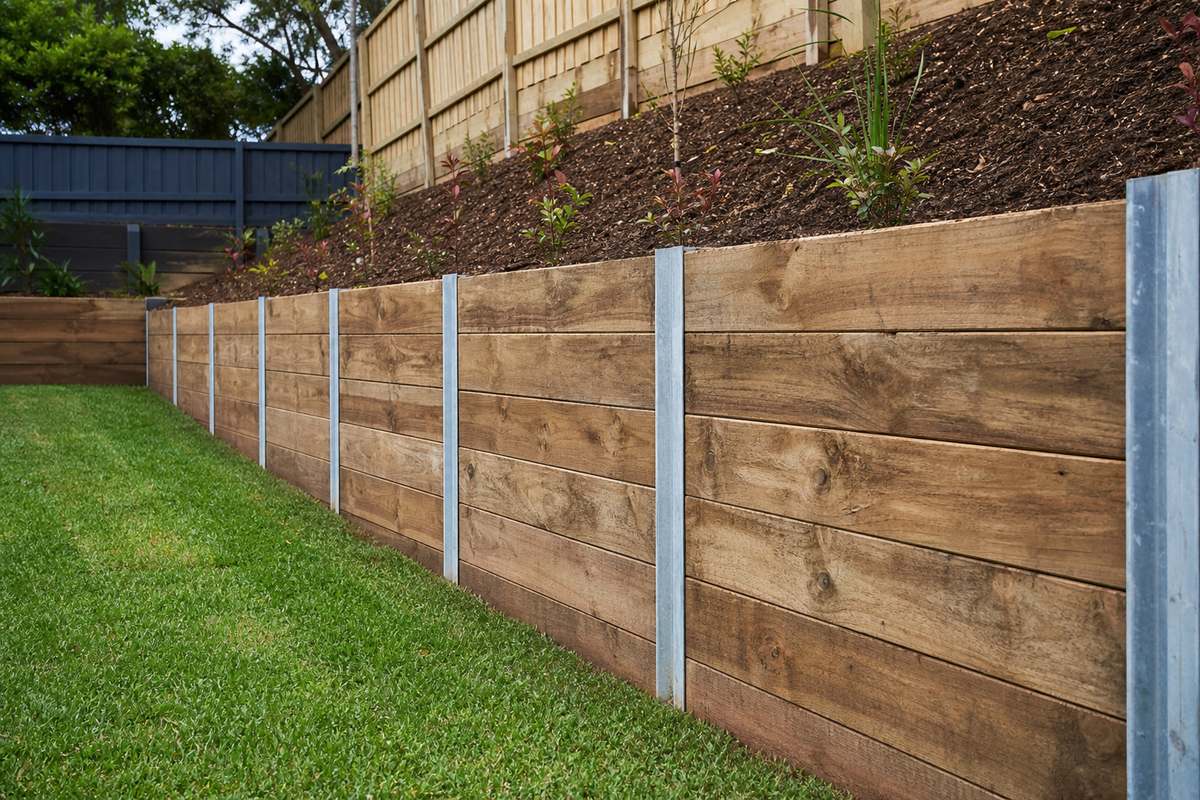
Sleeper retaining walls are among the most popular landscape solutions across Melbourne and regional Victoria. Whether you’re levelling a sloped backyard or creating terraced garden beds, the steel posts you choose are the backbone of the entire structure. Galvanised steel posts from RW Steel Victoria deliver the corrosion resistance and structural strength that timber sleeper walls demand.
Why Galvanised Steel Posts Are Essential for Sleeper Walls
Timber and concrete sleepers rely on vertical posts to resist the lateral earth pressure behind the wall. Galvanised steel H-section posts are hot-dip coated with a zinc layer that shields the steel from moisture, soil acids and the general corrosion cycle that ruins untreated metal within a few years. In Melbourne’s variable climate—wet winters followed by dry summers—galvanisation is the minimum level of protection you should consider.
Hot-dip galvanising to AS/NZS 4680 typically provides 50–80 µm of zinc coating, enough to protect buried steel for decades. Compared to painted or powder-coated posts, galvanised posts require zero maintenance once installed, which makes them the cost-effective choice over the life of a retaining wall.
Choosing the Right Post Size for Your Sleeper Wall
The height and loading of your retaining wall determines the steel section you need. Here’s a quick reference:
Walls up to 600 mm: 100UC14.8 galvanised posts at 1.8–2.0 m spacings are usually sufficient for low garden walls using timber sleepers.
Walls 600 mm – 1.0 m: Step up to 150UC23.4 posts. These provide substantially more flange area for the sleepers to bear against and greater moment capacity to resist soil pressure.
Walls 1.0 m – 1.5 m and above: 200UC posts (or engineered designs using 200UB/250UB) are required. Walls above 1 metre in most Victorian councils need an engineer’s certification, so consult a structural engineer before you begin. Request a quote from RW Steel and we can help you match the right section to your engineering specification.
Installation Best Practices
Getting the posts in correctly is the most critical step in building a sleeper retaining wall. Follow these guidelines:
Footing depth: As a rule of thumb, bury at least one-third of the total post length below ground level. For a 1-metre wall with 2.4 m posts, that means roughly 800 mm of embedment in concrete.
Concrete footings: Use N20 (20 MPa) concrete. Hole diameter should be at least 300 mm, and ideally 450 mm for taller walls. Pour concrete to just below finished ground level so the footing is hidden.
Post spacing: Typical centres are 1.8 m to 2.4 m depending on sleeper length. Ensure the sleepers overlap the post flanges by at least 50 mm on each side for a secure fit.
Drainage: Install 100 mm ag-pipe behind the wall at footing level, wrapped in geotextile fabric, draining to a suitable outlet. Poor drainage is the number-one cause of retaining wall failure.
Timber Sleepers vs Concrete Sleepers with Galvanised Posts
Both timber and concrete sleepers slot neatly between galvanised H-posts. Timber sleepers (typically treated hardwood or CCA-treated pine) are lighter and easier to handle, making them a popular DIY choice. Concrete sleepers are heavier but offer greater durability and a more modern aesthetic. Galvanised steel posts work equally well with either material—the key is matching the post flange width to the sleeper thickness.
Where to Buy Galvanised Steel Posts in Victoria
RW Steel Victoria supplies galvanised H-section posts across Melbourne and regional areas including Gippsland and the Latrobe Valley. We stock 100UC, 150UC, 200UC, and 250UC profiles, cut to length and hot-dip galvanised. Delivery is available across Victoria, or you can pick up from our yard.
Browse our full range of retaining wall steel products, check out completed projects in our project gallery, or contact our team for advice on the right post size for your sleeper retaining wall.