When building a retaining wall that needs to last decades, the choice of steel posts makes all the difference. Galvanised steel retaining wall posts offer superior corrosion protection and structural integrity, making them the go-to option for Australian residential and commercial projects. Whether you’re retaining a gentle slope or engineering a wall over a metre high, understanding your post options is critical to getting it right the first time.
Why Choose Galvanised Steel for Retaining Walls?
Hot-dip galvanisation coats steel in a protective layer of zinc, shielding the base metal from moisture, soil acids, and the harsh Australian climate. Unlike painted or powder-coated finishes that can chip and peel, galvanised coatings form a metallurgical bond with the steel, providing long-lasting corrosion resistance — typically 50 years or more in most soil conditions.
For retaining wall applications, galvanised steel is particularly valuable because the posts sit below ground level where moisture and soil contact are constant. A standard galvanised coating of 600 g/m² (approximately 85 microns per side) is the minimum recommendation for buried steel in Australian conditions. If you’re working with particularly aggressive soils — acidic clay, high-salinity coastal ground, or waterlogged sites — heavier galvanising or additional protective wrapping may be needed.
H-Section vs Universal Column (UC) Profiles
The two most common profile types for galvanised steel retaining wall posts are H-channel sections and Universal Columns (UC). Both feature a distinctive H-shaped cross-section, but they differ in key ways:
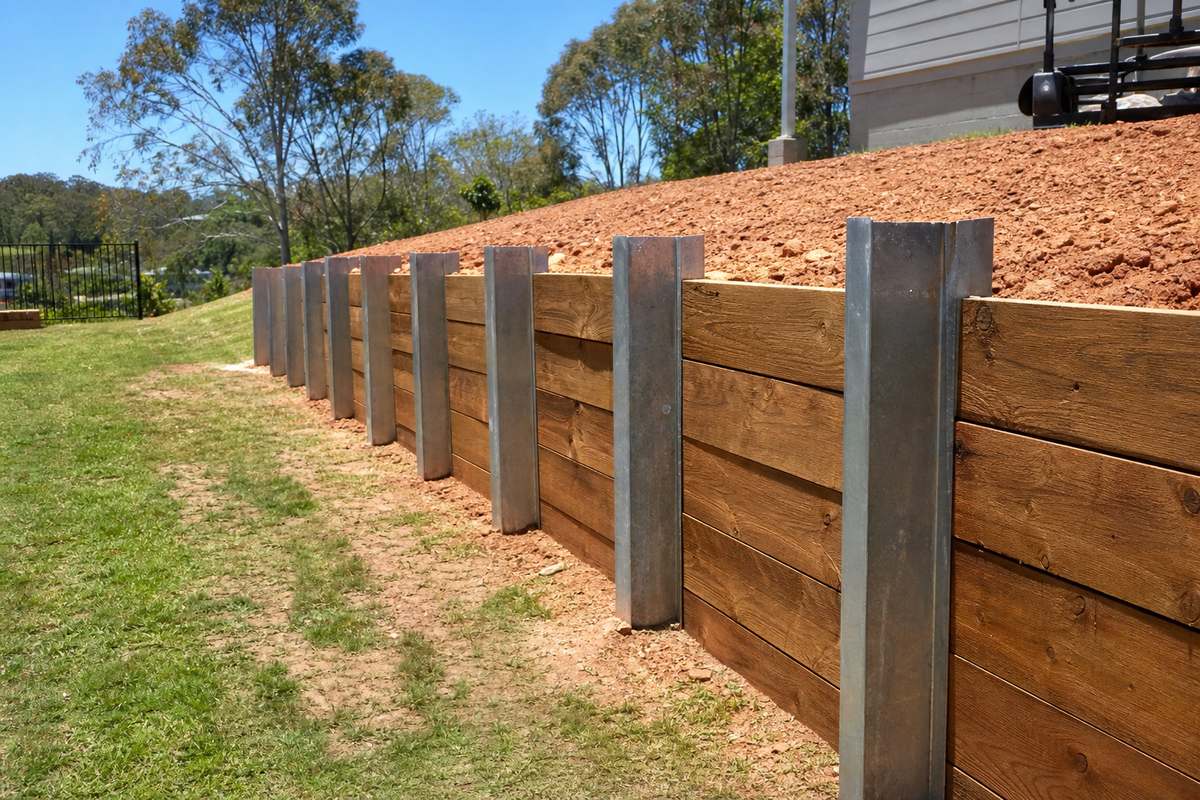
H-channel steel posts (also called parallel flange channels or galvanised H posts) are lighter-weight sections designed specifically for sleeper retaining walls. They slot timber or concrete sleepers into the flanges on each side, creating a clean, efficient wall system. Common sizes include 100mm, 125mm, and 150mm depths.
Universal Columns (UC) are heavier structural sections with wider flanges relative to their depth. Sizes like 150UC, 200UC, and 250UC are used for taller or more heavily loaded retaining walls. Their greater section modulus means they can handle significantly higher earth pressures, making them essential for walls over 1 metre in retained height.
Sizing Your Galvanised Steel Posts
Choosing the correct post size depends on three main factors: the height of the wall (retained height), the spacing between posts, and the type of soil being retained. As a general guide:
Up to 600mm retained height: Lighter H-channel sections (75–100mm) at 1.8–2.4m spacing are typically sufficient. These are ideal for garden beds and low-level landscaping walls.
600mm to 1,000mm retained height: Medium H-channels (100–125mm) or 150UC posts are recommended. Post spacing should be reduced to 1.5–2.0m for stability.
Over 1,000mm retained height: Structural engineering certification is required in most Australian states. 200UC or 250UC posts are commonly specified, with post spacing as tight as 1.2–1.5m. A qualified structural engineer should calculate the exact requirements based on your site conditions.
Regardless of wall height, the general rule is to bury at least one-third of the total post length below finished ground level. For a 1.5m exposed wall height, the post should extend at least 750mm below ground — meaning a total post length of around 2.25m minimum.
Installation Best Practices
Proper installation is just as important as selecting the right post. Here are the key steps for a successful retaining wall build with galvanised steel posts:
1. Dig post holes to the correct depth. Use an auger or post-hole digger to create holes at least 300mm wider than the post section. The hole depth should accommodate the buried length plus a 100mm gravel drainage layer at the base.
2. Set posts plumb in concrete. Use N20 (20 MPa) concrete to set each post, checking for plumb with a spirit level on two faces. Brace posts temporarily until the concrete has cured for at least 24–48 hours.
3. Allow for drainage. Install a 100mm agricultural pipe behind the wall at the base, bedded in 20mm gravel. Weep holes or drainage gaps at the base of the wall are essential to prevent hydrostatic pressure build-up, which is the number-one cause of retaining wall failure.
4. Slide sleepers into place. Once the concrete has cured, slide timber or concrete sleepers between the flanges of the posts, working from the bottom up. Ensure each sleeper is level and sits flush against the previous one.
Galvanised Steel Posts Available at RW Steel Victoria
At RW Steel Victoria, we stock a full range of galvanised steel retaining wall posts in both H-channel and UC profiles. All our galvanised posts are hot-dip galvanised to Australian standards, ensuring maximum corrosion protection for in-ground use.
We supply posts cut to custom lengths and can advise on the right section size for your project. Whether you’re a homeowner tackling a weekend landscaping project or a builder working on a multi-lot subdivision, we have the stock and expertise to help.
Browse our project gallery to see examples of completed retaining walls using our galvanised steel posts. Ready to get started? Request a quote or contact our team today for sizing advice and pricing.