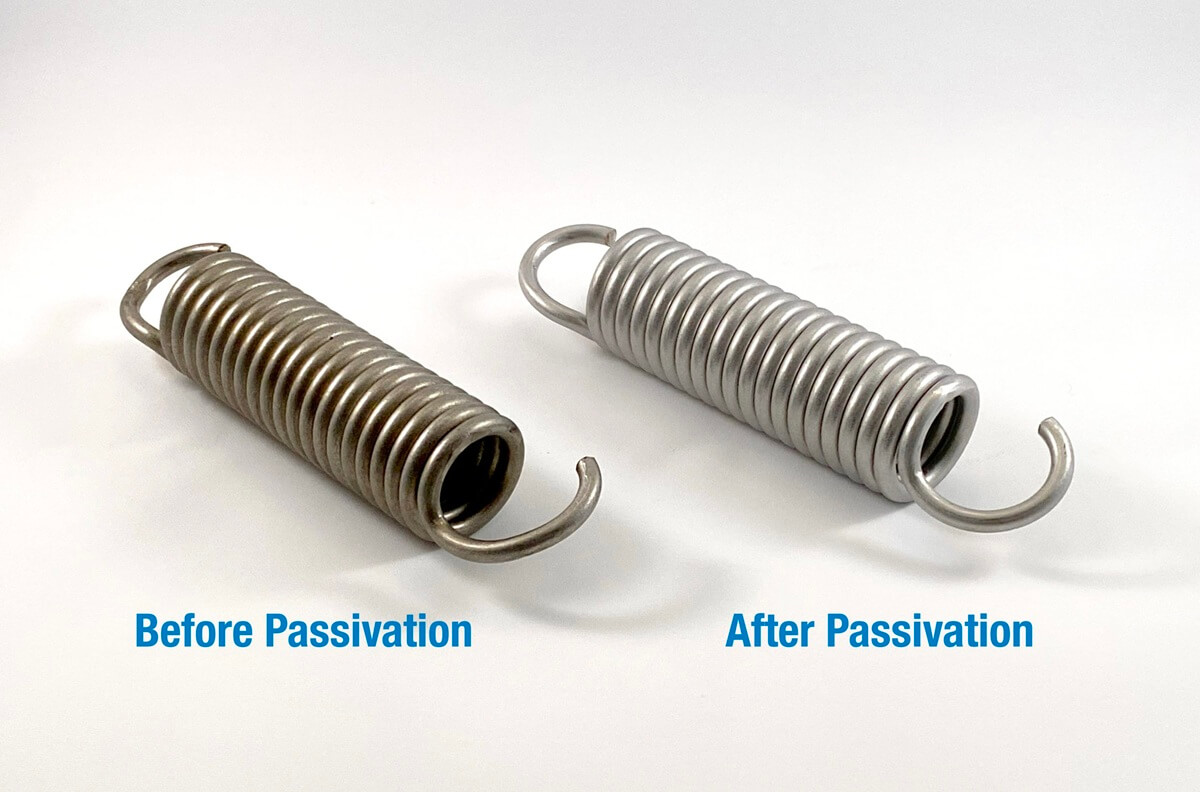
 Stainless steel is one of the easiest materials to work with in construction and engineering, in part due to its strength, durability and resistance to corrosion. These properties make it a popular choice for everything ranging from structural supports to equipment. However, many people often overlook the fact that stainless steel still requires proper surface treatment to perform at its best and retain its corrosion resistance. In this post, we thus take a closer look at what this treatment process, known as passivation, entails and why it is crucial not to neglect it when working with stainless steel.
What is Passivation?
Passivation refers to the process in which stainless steel is treated with a mild acid to remove free iron and other surface contaminants. This is essential because stainless steel’s corrosion-resistant properties are a result of the thin chromium oxide layer that forms naturally on its surface. When the steel is machined, welded or otherwise handled with carbon steel tools, particles of free iron may become embedded on the surface, disrupting the formation of the oxide layer from the chromium in the stainless steel.
By removing these impurities from the surface of the stainless steel, passivation thus restores the protective oxide layer and prevents corrosion from occurring. This ensures that the stainless steel is able to continue performing as intended, even in damaging or corrosive environments.
When is Passivation Required?
As a general rule of thumb, passivation is necessary anytime stainless steel has gone through any fabrication, welding or processes that may have introduced surface contamination. In particular, passivation is especially important in the following situations:
- After Welding and Cutting: The heat and surface disruption that is generated during the welding or cutting process can compromise the oxide layer, especially along the surfaces that have become freshly exposed to the surrounding environment.
- After Machining or Grinding: Tools that are made from carbon steel are especially prone to leaving microscopic iron particles on the surface of stainless steel, and it is thus important to treat the steel after these processes.
- For Sanitary Applications: If the stainless steel is being used in a sanitary application, such as in the food, pharmaceutical or medical industries, passivation is crucial to ensure that the steel does not lose its corrosion-resistant properties.
- When Surface Appearance Matters: Discolouration can occur as a result of localised corrosion on stainless steel. To prevent this, passivation is needed when the surface appearance of the stainless steel matters.
Get Your Steel from RW Steel
Ensuring that you get your steel from a reputable supplier can also go a long way to helping you maintain the quality and performance of your steel structures in the long term. RW Steel is the premier supplier of steel in Melbourne, and we offer a wide selection of steel sections to meet your every need, ranging from galvanised H channel steel posts to retaining wall steel H beams. Get a free quote from our website or contact us today to find out more about how we can help with all of your steel needs!
Image Source: Aero TMF