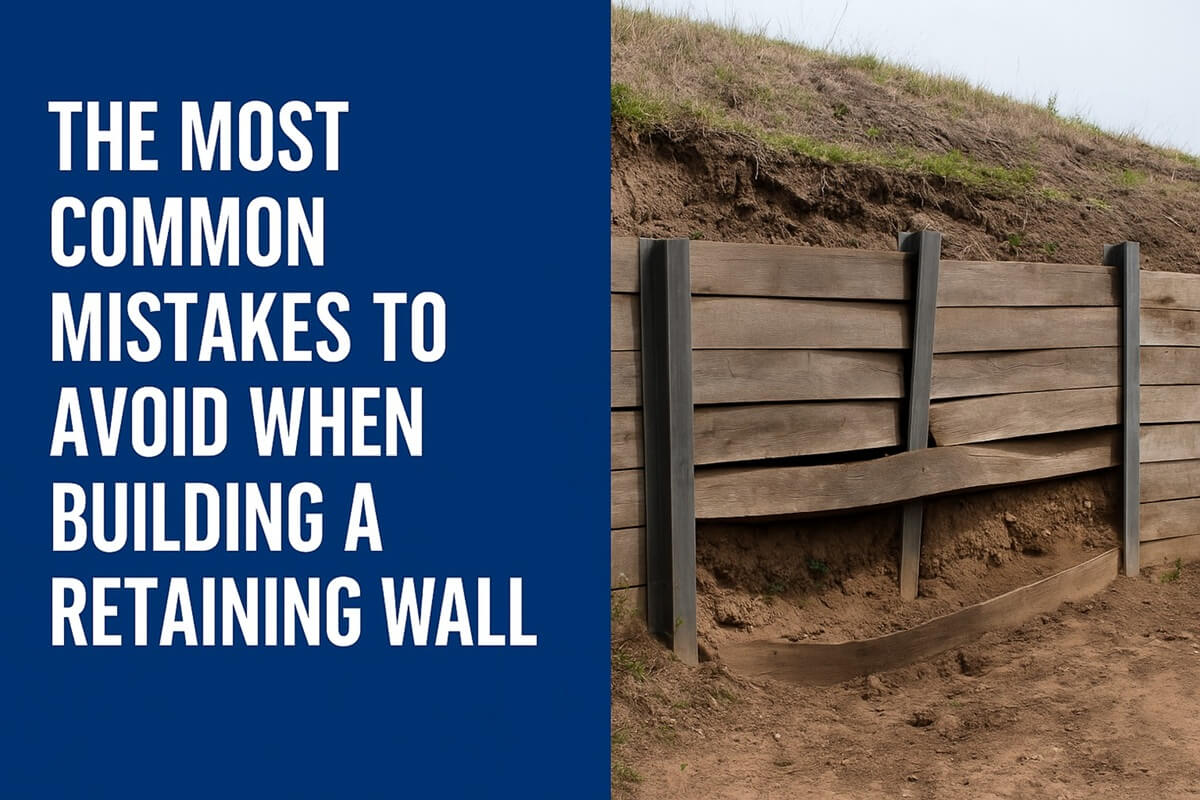
 A well-built retaining wall can transform a sloped or uneven landscape into a functional and attractive outdoor space. But like any structural project, a few key missteps during planning or construction can lead to costly repairs—or worse, structural failure down the line.
At RWSteel, we’ve worked with countless landscapers, builders, and homeowners across Melbourne, and we’ve seen firsthand which mistakes tend to cause the most trouble. Here are some of the most common issues to avoid when constructing a retaining wall.
- Using the Wrong Posts – Your retaining wall is only as strong as the posts that support it. Too often, people underestimate the pressure that soil places on a wall and choose posts that are too thin, too short, or not rated for outdoor use. Galvanised steel posts, particularly H-beams, are a reliable option for strength and long-term durability.
- Skipping Drainage – One of the biggest causes of retaining wall failure is poor drainage. Water that builds up behind the wall adds enormous pressure. Always incorporate proper weep holes, drainage pipes, or gravel backfill to allow water to escape easily.
- Inadequate Footings – Even short walls need a strong foundation. If the footings are too shallow or not level, the entire wall can shift or collapse over time. Make sure the posts are anchored deep enough and the base is compacted and reinforced appropriately for your soil type.
- Incorrect Sleeper Selection – Not all sleepers are created equal. Whether using timber or concrete, they must be rated for use in retaining walls. Substandard or untreated timber can rot prematurely, and using incompatible materials with your steel posts can create stress points.
- Poor Planning Around Angles and Corners – Walls that wrap around garden beds or property edges often require angled posts or custom-cut lengths. Using straight posts in tight corners without reinforcement can weaken the structure. It’s worth taking extra time to plan and measure correctly, or get advice if you’re unsure.
- Neglecting Council Requirements – In many areas, retaining walls over a certain height require permits or engineering. Always check with your local council before building. Cutting corners here can result in fines or mandatory reconstruction.
- Underestimating Load and Pressure – Retaining walls don’t just hold back dirt—they often support garden beds, pathways, or even fencing. If you’re building a wall in a high-load zone, it’s important to factor in that extra weight and select appropriate materials.
Whether you’re doing it yourself or hiring professionals, avoiding these common mistakes can save you time, money, and hassle. At RWSteel, we’re here to help with quality materials, expert advice, and a commitment to helping you get the job done right the first time.