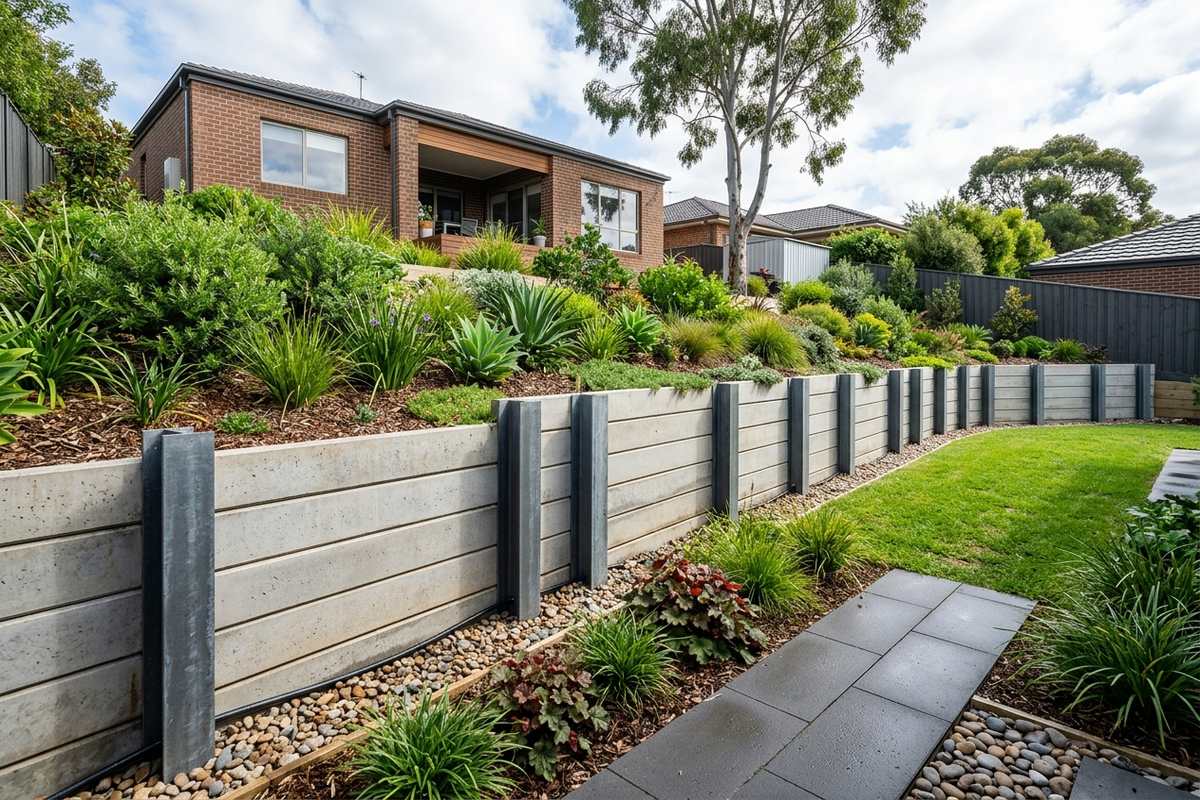
 When it comes to building a retaining wall that will last for decades, the material you choose for your posts matters more than almost anything else. Retaining wall steel has become the go-to choice for engineers, landscapers and homeowners across Melbourne and Victoria — and for good reason. Steel posts outperform timber and concrete in nearly every practical measure: strength, longevity, ease of installation, and long-term value.
Whether you’re planning a small garden terrace or a major cut-and-fill retaining structure, this guide walks you through everything you need to know before you buy — from steel types and finishes to sizing, sleeper compatibility and local considerations. You can also browse our retaining wall steel range to see what’s available cut to length and ready to deliver.
Steel wins out over timber on almost every front. Hardwood timber posts were once the standard, but they rot, split and attract termites — typically requiring replacement within 15–25 years. Concrete posts are heavy and brittle, making them difficult to transport and install, and they can crack under differential soil movement. Steel posts, by contrast, offer exceptional structural strength, are available in a wide range of standard sizes, and — when properly finished — will outlast both timber and concrete by many decades.
Types of Steel Used for Retaining Walls
Not all steel sections are created equal for retaining wall applications. The most commonly used profiles are:
Universal Beams (UB) — Also known as I-beams or H-beams, UB sections have wide flanges and a deep web that provides excellent bending resistance. They are the most common choice for retaining walls because sleepers slot neatly between the flanges. Common sizes include 150UB, 200UB and 250UB.
Universal Columns (UC) — UC sections have a squarer, stockier profile compared to UBs, with flanges that are nearly as wide as they are deep. They carry heavier loads with less deflection, making them ideal for taller walls or high-surcharge situations. Common sizes include 150UC, 200UC and 250UC. Our UC sections guide covers these in detail.
H-Section (H-Channel) Posts — Often referred to as H-piles or H-sections, these are purpose-designed retaining wall posts with consistent flange and web dimensions that create even sleeper channels on both sides. They are especially popular for galvanised applications. Our guide to galvanised H-section posts has everything you need to know about this profile.
Parallel Flange Channels (PFC) — PFC sections are C-shaped in profile and are sometimes used for lower retaining walls or as capping pieces. They have one open side, so they’re less suited to double-sided sleeper applications but work well for single-sided installations against a fence or boundary.
Steel Finish Options: Galvanised, Raw and Corten
The finish you choose affects both the lifespan and the cost of your retaining wall. There are three main options:
Hot-dip galvanised steel is the most popular choice for residential retaining walls. The post is submerged in molten zinc, coating both the inside and outside surfaces to a minimum of 85 microns. This provides a corrosion barrier that will typically last 50–80 years in soil contact. Galvanised posts cost more upfront than raw steel but require no ongoing maintenance and are often the most cost-effective option over the life of the wall.
Raw (uncoated) steel is the most affordable option at point of purchase. Without a protective coating, raw steel will begin to rust when exposed to moisture and soil. For below-ground use, raw steel is generally only appropriate if you plan to apply a bitumen paint or other protective coating yourself, or if the wall will be in very dry conditions. Above-ground sections of raw steel posts will rust and require maintenance over time.
Corten (weathering steel) develops a stable, self-protecting rust patina over time that actually halts further corrosion. It’s popular in architectural and landscaping applications where a warm, russet-brown aesthetic is desired. Corten does not need painting or galvanising, and its patina can last decades. For a detailed comparison, read our article on corten vs galvanised steel systems.
Choosing the Right Size: Wall Height and Post Sizing
Selecting the correct post size is critical to the structural integrity of your retaining wall. As a general sizing guide:
Walls under 800mm: A 150UB or 150UC is typically adequate for low retaining walls with standard soil conditions and no surcharge loading from vehicles, structures or steep slopes above.
Walls 800mm–1.2m: Step up to a 200UB or 200UC. At this height, soil pressure and potential surcharge loads increase significantly, and the extra web depth provides the necessary bending resistance.
Walls over 1.2m: Use a 250UB or 250UC as a minimum. Taller walls can generate substantial horizontal forces, particularly after rain when saturated soil becomes much heavier. For walls over 1.5m or with heavy surcharge, always engage a structural engineer to confirm sizing and embedment depth.
Post embedment depth (how far the post goes into the ground) is typically 1/3 to 1/2 of the exposed wall height — so a 1.0m wall requires at least 400–500mm of post below ground level. Always check with your local council for specific engineering requirements in your area.
Sleeper Compatibility: What Goes Between the Posts
Steel posts are designed to work with two main sleeper types, and the post profile determines how well they work together.
Concrete sleepers are the most popular modern choice. They are heavy, strong, and completely immune to rot and termites. Standard concrete sleepers are 200mm wide and slot between the flanges of a UB or UC section with minimal gap. Concrete sleepers are available in a wide range of surface finishes including exposed aggregate, timber-look and smooth render finishes. You can explore both concrete and timber sleepers in our range.
Hardwood timber sleepers offer a more natural aesthetic and are still widely used in gardens and landscaping. They are typically railway hardwood (usually ironbark or spotted gum) and are durable, but will eventually decay over 20–30 years depending on exposure. Timber sleepers are lighter and easier to cut on site, making them a good option for curved or non-standard wall layouts.
When selecting your post size, confirm the flange width against your sleeper width. Most standard concrete sleepers (200mm wide) will fit comfortably between the flanges of a 200UB or 200UC. For narrower sleepers or tighter tolerances, check the exact flange clearance of your chosen section.
Melbourne and Victoria Considerations
Victoria’s diverse soil conditions — from Melbourne’s reactive clay in the inner suburbs to sandy loam in coastal areas and rocky subsoil in the ranges — all affect retaining wall design differently. Clay soils expand when wet, placing additional lateral pressure on retaining walls, which is why proper drainage behind the wall is critical. A perforated drainage pipe (agi pipe) and gravel backfill will channel water away and significantly extend the life of the wall.
In Melbourne, retaining walls over 1.0m in height typically require a building permit, and the specific requirements vary by council. Some councils require engineering certification for any retaining wall over 700mm. We recommend checking with your local council before beginning work, particularly if the wall is near a boundary or on a steep block.
Steel posts are well suited to Victoria’s climate. Galvanised posts are unaffected by Melbourne’s wet winters and dry summers, and corten steel develops its protective patina reliably in the local climate. The main consideration for below-ground portions is ensuring the galvanised coating is intact before installation — any cut ends should be treated with cold galvanising compound.
Why Supply from RW Steel Victoria
RW Steel Victoria specialises exclusively in steel for retaining walls. Unlike general steel distributors, we stock the specific sizes and finishes that are most commonly used in residential and commercial retaining wall projects across Melbourne and Victoria. We offer:
Cut to length — We cut steel posts to your exact depth requirements so you receive posts ready to install, with no waste. Specify your wall height and we’ll calculate the cut length including embedment.
Delivery across Victoria — We deliver to Melbourne metro and regional Victoria. Whether you’re in Geelong, Ballarat, Bendigo or the Mornington Peninsula, we can get steel to site.
Expert advice — Our team understands retaining wall applications in detail. If you’re not sure which section or finish is right for your project, contact our team and we’ll help you spec it correctly from the start.
Ready to move forward? Request a free quote with your post dimensions and quantities and we’ll come back to you quickly with pricing and lead times. We supply trade, builders, landscapers and homeowners throughout Victoria.