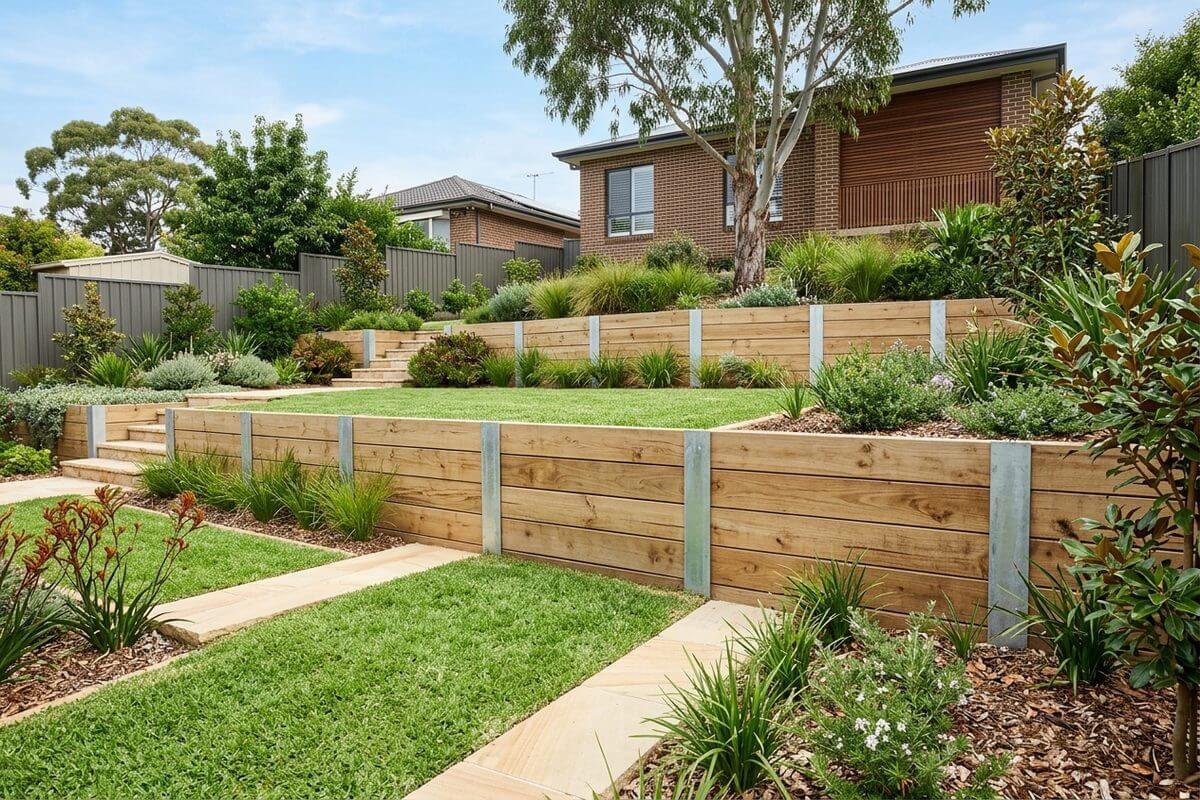
 Sleeper retaining walls are a popular solution in residential landscaping throughout Australia. They are widely used to create level garden areas, manage sloped blocks, and provide structural support for outdoor spaces. While sleepers often receive most of the attention during planning, the structural performance of the wall depends heavily on the quality and placement of the steel posts that support them. Proper spacing, correct sizing, and careful installation of steel retaining wall posts are essential for ensuring the wall performs reliably over time.
When designing a sleeper retaining wall, several structural considerations come into play. These include soil pressure, wall height, drainage conditions, and the strength of the retaining wall steel used for the supporting framework. By understanding these factors and applying correct spacing guidelines, builders and landscapers can create durable walls that remain stable for many years.
Why Steel Posts Are Essential in Sleeper Retaining Walls
Steel posts form the structural backbone of a sleeper retaining wall. Installed vertically into the ground and embedded in concrete footings, they hold the sleepers firmly in place while resisting the pressure exerted by the retained soil. Without strong and properly installed posts, even high-quality sleepers can shift or bow under load.
Modern landscaping projects often use sleeper retaining wall steel posts galvanised to improve durability and corrosion resistance. Galvanised steel is particularly suitable for outdoor environments because it provides a protective coating that prevents rust from developing when the steel is exposed to moisture and soil contact.
Using galvanised posts not only extends the life of the wall but also reduces maintenance and long-term replacement costs. In residential settings where retaining walls are expected to last decades, this extra protection is a valuable investment.
Understanding Post Spacing for Structural Stability
One of the most important design decisions when building a retaining wall is determining the correct spacing between posts. Post spacing directly influences how much load each post must carry and how well the sleepers are supported along the wall’s length.
For many residential walls, posts are commonly spaced between 1.5 metres and 2.4 metres apart. The exact spacing depends on several factors, including wall height, soil type, and the thickness of the sleepers being used.
Closer post spacing provides additional support and reduces the risk of sleepers bowing or bending under pressure. Wider spacing may reduce material costs but can increase structural stress if the sleepers span too far between posts.
This is why careful planning and adherence to steel post retaining wall specifications are essential. Following recommended guidelines helps ensure the structure performs safely while maintaining an efficient use of materials.
Factors That Influence Retaining Wall Design
Designing a reliable retaining wall involves more than simply installing steel posts at regular intervals. Several site-specific factors must be considered to determine the most appropriate structural approach.
Wall height is one of the primary influences on design. Taller walls experience greater soil pressure and therefore require stronger posts, deeper footings, and often reduced spacing between posts. In some cases, engineering design may be required to confirm the appropriate structural details.
Soil conditions also play a significant role. Clay soils, which expand and contract with moisture changes, can exert additional pressure on retaining walls. In these environments, stronger steel retaining wall posts and more conservative spacing are often recommended to maintain stability.
Drainage is another critical factor. Water build-up behind a retaining wall dramatically increases the load placed on the structure. Incorporating drainage systems such as agricultural pipes, gravel backfill, and geotextile fabric helps relieve this pressure and prolongs the life of the wall.
Installation Best Practices
Even the strongest materials can fail if installation is not carried out correctly. Proper placement of steel posts begins with accurate excavation and footing preparation. Posts should be set at the required depth and secured in concrete to prevent movement over time.
Alignment is equally important. Posts must be installed perfectly vertical and spaced precisely according to the design plan. Any deviation can create uneven load distribution and compromise the structural performance of the wall.
Builders should also ensure that sleepers fit securely within the channels of the steel posts. A tight and consistent fit helps prevent movement and allows the wall to function as a cohesive structural system.
Long-Term Performance and Maintenance
One of the advantages of using galvanised steel posts in landscaping projects is their long-term durability. Properly installed retaining wall steel can perform for decades with minimal maintenance.
However, periodic inspection is still recommended. Checking for signs of soil movement, drainage issues, or physical damage helps identify potential problems before they develop into larger structural concerns.
Maintaining effective drainage behind the wall is particularly important. Ensuring that water can flow away freely prevents excessive pressure from building up and helps protect both the steel posts and the sleepers.
Final Thoughts
Sleeper retaining walls play an important role in shaping residential landscapes and managing uneven terrain. While sleepers provide the visible surface of the wall, the structural integrity of the system relies heavily on the quality and placement of the supporting steel posts.
By selecting durable sleeper retaining wall steel posts galvanised, following appropriate steel post retaining wall specifications, and carefully planning post spacing, builders can create strong and reliable retaining walls suited to a wide range of residential applications.
With the right design approach and proper installation practices, steel-supported sleeper retaining walls offer a long-lasting and practical solution for outdoor landscaping projects across Australia.