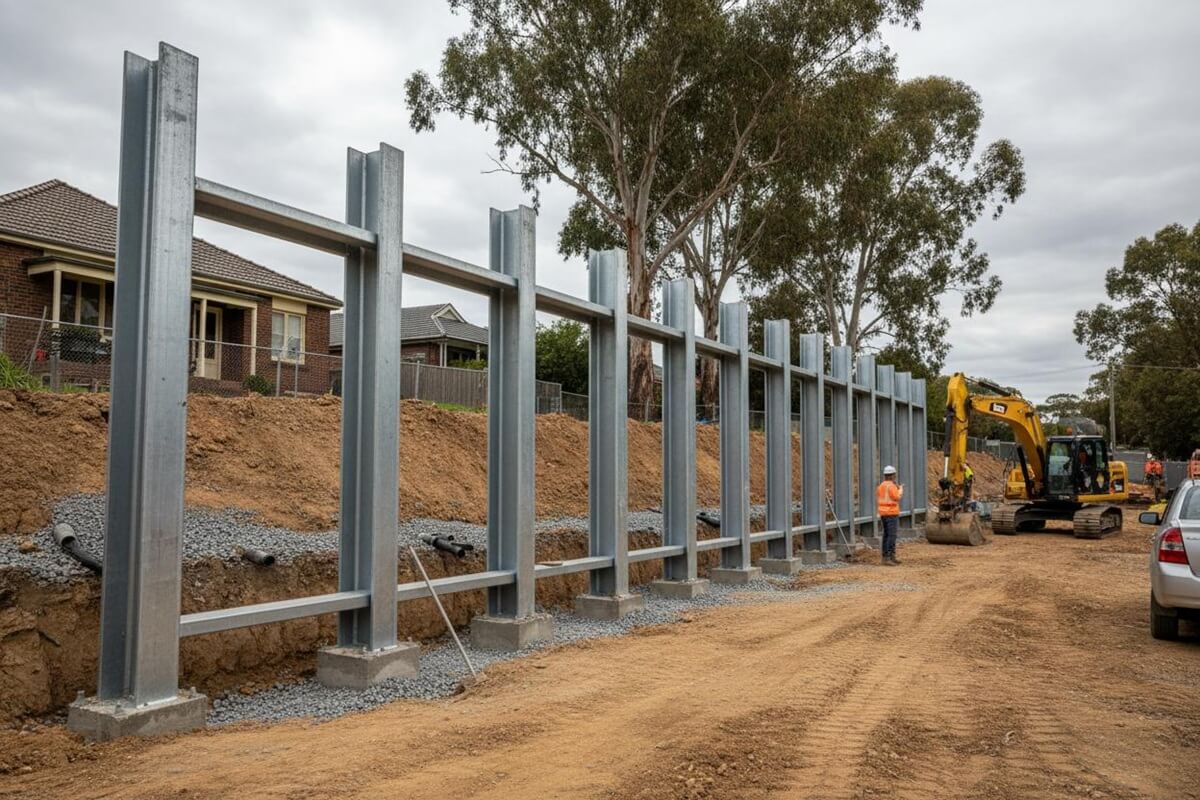
 Selecting the correct steel beam size is one of the most critical decisions when building a retaining wall. In Melbourne, where soil conditions range from sandy profiles to highly reactive clay, the performance of a retaining wall depends heavily on how well the steel section matches the site requirements. Using an undersized beam can lead to movement or failure, while over-specifying steel can unnecessarily increase costs.
Steel sections such as 100UC15, 200UB18, and 250UB25 are commonly used in retaining wall construction across Victoria. Each profile serves a different purpose and performs best under specific conditions. Understanding how these sections behave helps ensure your retaining wall is structurally sound, compliant, and built to last.
Why Steel Beam Selection Matters
Retaining walls are subjected to constant lateral pressure from soil and moisture. This pressure increases with wall height, poor drainage, and reactive ground conditions. The role of the steel beam is to resist this pressure and transfer the load safely into the footing and surrounding ground.
In retaining wall steel Melbourne projects, steel beams are often installed vertically as posts or horizontally as structural elements supporting sleepers or panels. Their size, shape, and weight determine how well they resist bending and deflection over time.
Choosing the correct beam size also impacts post spacing, footing depth, and overall wall design. A well-matched steel section allows for efficient construction without compromising safety.
Understanding UC and UB Steel Sections
Universal Columns (UC) and Universal Beams (UB) are designed for different structural roles, even though they may appear similar at first glance.
UC sections, such as 100UC15, have a near-square profile. This makes them ideal for vertical applications where compressive strength is required. UB sections, including 200UB18 and 250UB25, are wider and shallower, allowing them to perform well where bending resistance is important.
In retaining wall construction, both UC and UB sections are used depending on wall height, load conditions, and design requirements.
Where 100UC15 Is Best Used
100UC15 is typically used for smaller retaining walls where loads are relatively light. It is commonly specified for garden walls, planter boxes, and low-level landscaping features.
This section is suitable when:
- Wall heights are generally under one metre
- Soil pressure is moderate
- Drainage is well managed
- A compact post profile is preferred
Its lighter weight makes it easier to handle and install, particularly on residential sites with limited access. However, it is not suitable for taller walls or areas with heavy clay soils where higher lateral forces are expected.
Using 200UB18 for Standard Retaining Walls
200UB18 is a versatile option for standard residential retaining walls. Its wider flange provides improved resistance to bending, making it well suited to moderate wall heights and varied soil conditions.
This beam size is often used when:
- Wall heights approach or exceed one metre
- Soil conditions are mixed or moderately reactive
- Wider post spacing is desired
- Additional structural confidence is required
In many Melbourne suburbs, 200UB18 offers a practical balance between strength and cost, particularly when combined with proper drainage and footing design.
When 250UB25 Becomes Necessary
For taller retaining walls or challenging site conditions, 250UB25 is commonly specified. This heavier section provides significantly greater stiffness and load capacity, making it ideal for demanding applications.
Situations where 250UB25 is appropriate include:
- Retaining walls over 1.5 metres in height
- Reactive clay soils with high lateral pressure
- Sloping blocks or boundary walls
- Engineered retaining wall systems
While heavier to install, the added strength of 250UB25 reduces long-term movement and improves overall wall stability. Engineers often specify this section to provide additional safety margins.
Melbourne Soil and Drainage Considerations
One of the defining challenges for retaining wall steel Melbourne projects is soil behaviour. Clay soils expand when wet and shrink when dry, increasing pressure on retaining walls. Without proper drainage, even heavy steel sections can be overstressed.
Effective drainage systems typically include free-draining aggregate, geotextile fabric, and Agi pipes to divert water away from the wall. Proper drainage reduces pressure on the steel beams and extends the life of the retaining wall system.
Steel beam size and drainage design should always be considered together, not as separate elements.
Installation and Compliance
Correct installation is just as important as selecting the right steel section. Posts must be set to the correct depth, aligned accurately, and secured in appropriately sized concrete footings.
For walls over one metre, engineering design and council approval are often required. Engineers will specify beam size, spacing, footing dimensions, and concrete strength to ensure compliance with Australian Standards.
Following these requirements helps prevent costly remediation and ensures the retaining wall performs as intended over time.
Final Thoughts
Choosing the right steel beam size is essential for building a reliable retaining wall in Melbourne conditions. Sections like 100UC15, 200UB18, and 250UB25 each serve a specific role, and selecting the correct one depends on wall height, soil conditions, and structural demands.
By matching the steel section to the site requirements and combining it with proper drainage and installation practices, you create a retaining wall that is strong, compliant, and built for long-term performance. Investing time in correct steel selection at the start of the project pays off in durability, safety, and peace of mind.