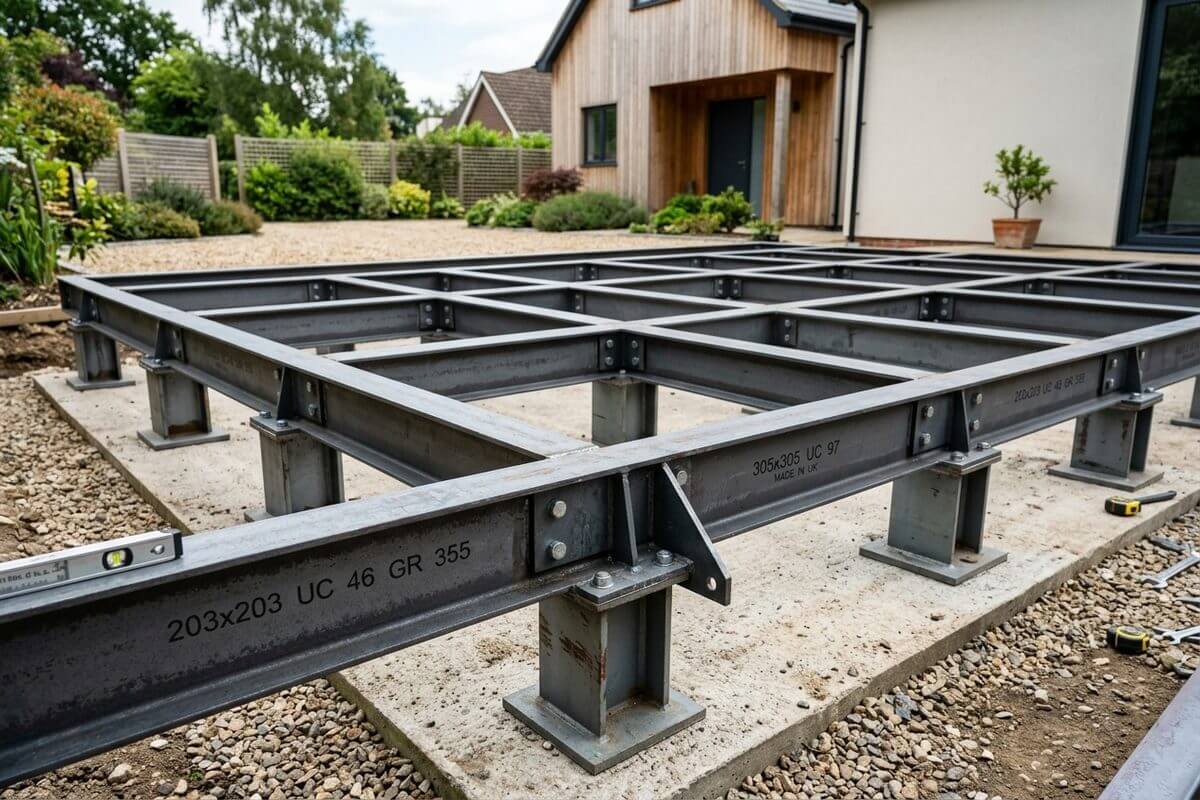
 Ground-level support frames are widely used in residential, commercial, and light industrial construction across Australia. These structural systems provide the foundation for decks, platforms, equipment bases, outdoor structures, and many other applications where strength and stability are required close to the ground. The reliability of these frames depends heavily on selecting the correct steel sections for the load conditions and structural layout.
Universal Column sections such as 150UC23.4, 150UC30, 200UC46.2, and 200UC52 are commonly used in these systems because of their ability to handle vertical loads while maintaining excellent structural stability. Their shape and load-bearing capacity make them particularly suitable for ground-level frameworks where columns and supports must resist both compression and environmental exposure.
Understanding how these UC sections work and how to integrate them into a well-designed support frame is essential for achieving long-term structural performance.
Why UC Sections Work Well for Ground-Level Frames
Universal Columns are designed with a near-square profile that distributes loads evenly through the steel section. This geometry allows them to perform efficiently under vertical loads while also providing resistance to buckling.
When used in ground-level frames, UC sections typically function as vertical support posts or load-bearing members that transfer weight directly into concrete footings. Because these sections are engineered to carry significant loads, they provide a stable base for structures built above them.
Common ground-level applications include:
- Deck support structures
- Raised outdoor platforms
- Equipment supports frames
- Carports and pergola bases
- Structural supports for small commercial installations
The consistent structural performance of UC sections makes them a preferred choice for engineers and builders working on these types of projects.
Understanding the Strength of 150UC23.4
The 150UC23.4 section is frequently used in medium-duty structural applications. It provides a solid balance between strength and manageability, making it suitable for residential and light commercial support frames.
This section performs well in situations where moderate loads must be supported without introducing unnecessary material weight or cost. Builders often choose 150UC23.4 when designing frameworks for decks or platforms that must remain rigid while supporting people, furniture, or equipment.
Typical advantages of this section include:
- Reliable vertical load capacity
- Compact profile suitable for tight installation spaces
- Efficient material usage for medium-scale projects
- Compatibility with standard base plates and connection systems
Because of these characteristics, 150UC23.4 is often specified for structural posts in ground-level framing systems.
When to Step Up to 200UC46.2
For projects with heavier structural demands, 200UC46.2 provides a stronger and more robust alternative. This section offers greater stiffness and load capacity, which becomes important when the structure supports significant weight or spans longer distances between supports.
200UC46.2 is commonly used in applications where:
- The structure must support heavy equipment or machinery
- Platform loads are expected to be high or dynamic
- Structural spans require additional stiffness
- Environmental exposure demands extra durability
In these cases, the increased strength of 200UC46.2 provides an additional safety margin and improves the overall stability of the support frame.
The Role of Larger UC Sections in Structural Design
While 150UC23.4 and 200UC46.2 are common choices, other sections, such as 150UC30 and 200UC52, are also used in ground-level framing systems when additional strength is required.
Engineers may specify these heavier sections when the structure must handle increased loads or where safety factors must be higher due to site conditions.
Some situations where larger UC sections are beneficial include:
- Multi-level platforms with concentrated loads
- Industrial work areas with heavy machinery
- Outdoor structures exposed to wind or dynamic forces
- Structural upgrades to existing support systems
Selecting the appropriate UC size ensures that the structure remains stable while avoiding unnecessary overdesign.
Important Design Considerations
When designing ground-level support frames, several factors influence which UC section should be used. These considerations help determine the most efficient and structurally sound solution for the project.
Key design factors include:
- Load requirements
The weight of the structure, equipment, and occupants must be calculated to determine the required column capacity. - Span and layout
The distance between supports influences the amount of load carried by each column. - Foundation design
UC sections must transfer loads into properly designed concrete footings to prevent settlement or movement. - Environmental exposure
Outdoor steel structures may require galvanising or protective coatings to prevent corrosion. - Future load increases
Engineers often include additional capacity to allow for potential changes in use or added equipment.
Considering these factors early in the design process helps ensure the structure performs reliably over time.
Installation and Structural Alignment
Accurate installation is essential for the performance of ground-level support frames. UC columns must be positioned correctly and secured firmly to their foundations to prevent structural movement.
During installation, builders should ensure that:
- Columns are installed perfectly vertical
- Base plates are securely anchored into concrete footings
- Connections between beams and columns are properly aligned
- Structural tolerances are maintained across the frame
Attention to these details ensures the load paths remain consistent and prevents unnecessary stress on the steel components.
Long-Term Durability
Steel support frames built with UC sections are known for their durability and strength. When protected against corrosion and installed correctly, these structures can provide decades of reliable performance.
Protective measures such as galvanising or specialised coatings are often used for outdoor frames to prevent rust and extend the lifespan of the steel. Regular inspections and proper drainage around footings also help maintain structural integrity.
Final Thoughts
Designing stable ground-level support frames requires careful selection of structural steel sections that match the demands of the project. Sizes such as 150UC23.4, 200UC46.2, 150UC30, and 200UC52 offer a range of strength options suitable for residential, commercial, and light industrial applications.
By understanding how these UC sections perform and incorporating thoughtful structural design, builders can create strong and reliable support systems that provide long-term stability for a wide variety of outdoor and ground-level structures.