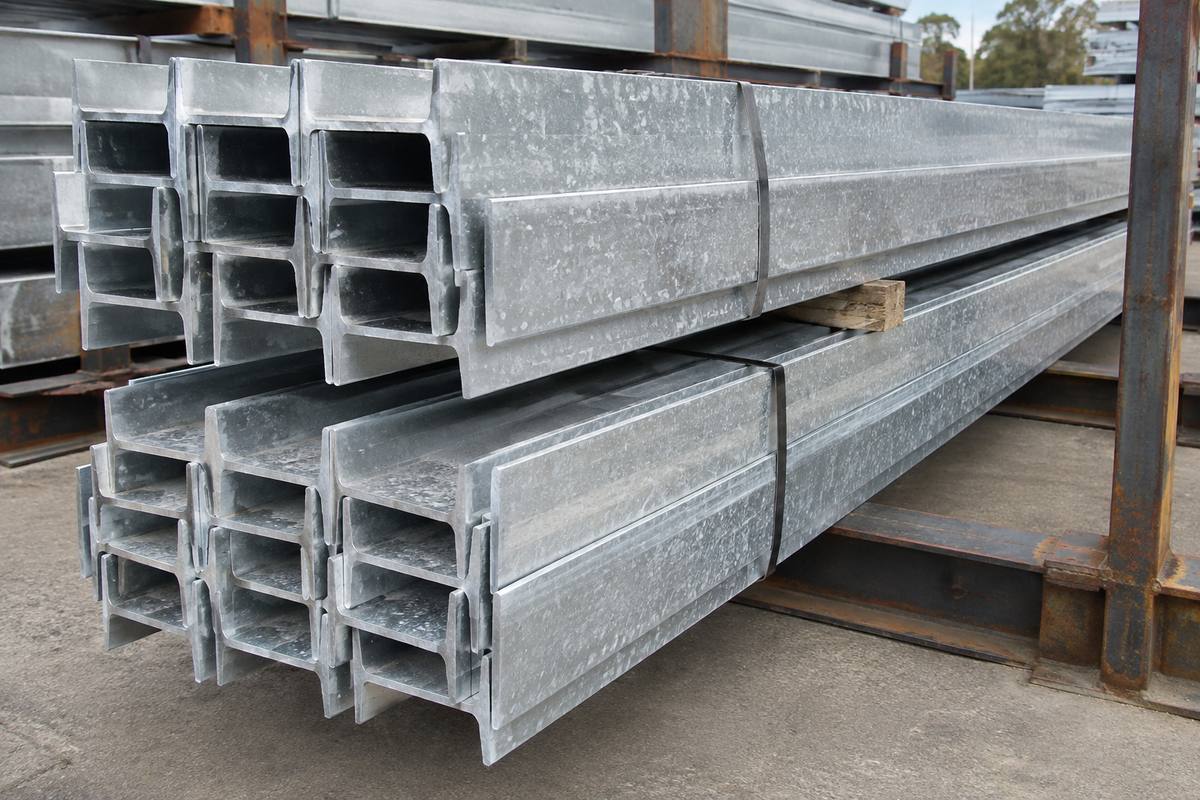
 Galvanised steel posts turn up everywhere on a building site: holding back soil in sleeper walls, carrying pergola beams, supporting carports and acting as fence or screen posts. The steel shape and size changes from job to job. The zinc coating that keeps the post intact in the ground does not. This guide covers how to choose the right section for what the post has to do.
Why hot-dip galvanising is the standard
Every post we supply is hot-dip galvanised to AS/NZS 4680. The finished steel is dipped in molten zinc, which bonds into the surface, coating inside corners, flange tips and pre-drilled holes evenly. If the coating is scratched, the zinc around the damage corrodes first and protects the exposed steel. That is why galvanised posts last decades in damp Melbourne clays where painted or black steel would rust through. Our earlier article on the benefits and lifespan of galvanised posts goes further into coating thickness.
Matching the section to the job
- Universal columns (UC): wide, equal flanges that are stiff in both directions. The default for retaining walls because sleepers slot neatly between the flanges. Common sizes: 100UC15, 150UC23/30, 200UC46, 250UC72.
- Universal beams (UB): deeper and narrower. Efficient where the load comes mainly from one direction, such as tall walls with thin sleepers or beams spanning a pergola. Common sizes: 150UB14, 200UB18, 250UB25.
- Parallel flange channels (PFC): C-shaped, used for end posts, corners and framing where one flat face is useful.
For a detailed comparison of profiles, see retaining wall steel H beams. Our full stock range is on the retaining wall steel page.
Length and embedment
Overall post length is the exposed height plus the embedment depth. For a cantilevered retaining wall, a common rule of thumb is to embed about the same length as the retained height, sometimes more in soft soils or where a driveway or slope adds load behind the wall. A 1.2 m wall might therefore need a post of roughly 2.4 m. Your engineer or council permit sets the final figure, and we cut each post to that length so no steel is wasted.
Cut, drilled and capped before galvanising
Any cutting, drilling or welding should be done before galvanising so the coating covers it all. Give us the hole positions for brackets or cleats and we will fabricate the posts first. If you have to cut on site, seal the cut end with zinc-rich cold galvanising paint the same day.
Ordering galvanised steel posts
Tell us the wall or structure height, run length, post spacing and soil conditions, and we will recommend a section and quote the full order, including concrete sleepers and accessories if you need them. Start through the quote and order form or contact our team directly.