Whether you spell it galvanized or galvanised, the product is the same: a structural steel post dipped in molten zinc so it can sit in wet soil for decades without rusting away. Because most engineering software, imported catalogues and search habits use the American spelling, we get asked for galvanized steel retaining wall posts almost as often as the Australian version — so here is the plain-English guide to what you are actually buying.
What galvanizing actually does
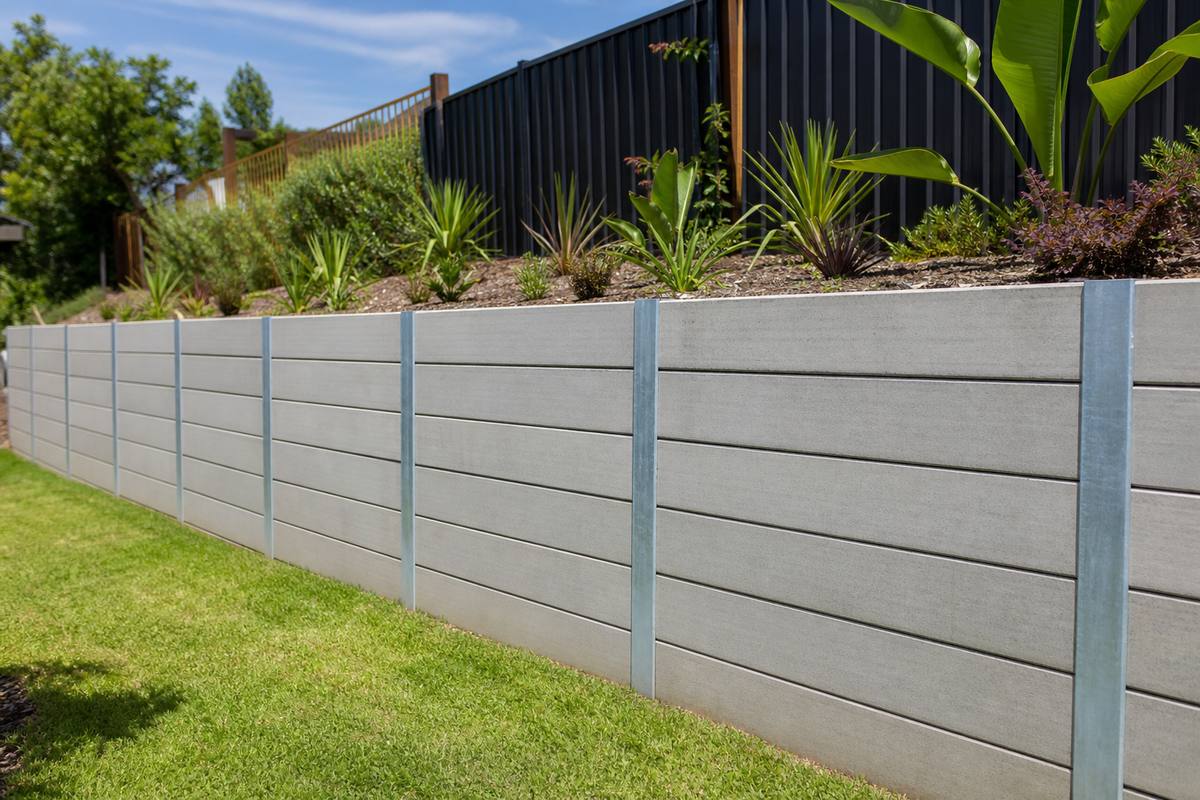
Hot-dip galvanizing to AS/NZS 4680 immerses the finished post in molten zinc at around 450°C. The zinc bonds metallurgically to the steel and then protects it two ways: as a physical barrier, and sacrificially — the zinc corrodes in preference to the steel, so even a drilled hole or a scratch stays protected at the edges. That is the reason we do not supply painted posts for buried applications; paint fails at every chip, zinc does not.
Coating thickness is what drives service life. Structural sections 6 mm and thicker pick up a minimum average coating of 85 µm, and in practice heavy universal columns often carry more. In the mild, moderately corrosive soils typical of Melbourne’s eastern and outer suburbs that puts the buried life of the post well past the design life of the sleepers it retains.
The sizes we stock
Galvanized retaining wall posts are almost always universal columns (UC) or universal beams (UB), cut to length and drilled or plain as required. The workhorses are:
- 100UC15 — low garden walls, typically up to about 600–900 mm of retained height
- 125UC / 150UC30 — the most common residential size for walls around 1.0–1.5 m
- 200UC46 / 200UC52 — taller walls, surcharge loads, driveway edges
- 250UC72 / 250UC89 — engineered walls, steep sites and commercial work
- 150UB / 200UB18 / 250UB25 — where the deeper, narrower profile suits the sleeper thickness
If you are weighing sections against each other, our guide to retaining wall steel H beams and profiles sets out how flange width and web depth change the way a wall behaves. The full stock list and lengths sit on the retaining wall steel page.
Galvanized versus black steel versus Corten
Black (untreated) steel is cheaper on day one and can be reasonable for a temporary wall or a fully encased post, but in permanent ground contact it is a false economy. Corten weathering steel is a genuine alternative when the steel is exposed and the rusted patina is the look you want — but Corten still needs care where it is buried or where run-off will stain paving. For a standard sleeper wall, galvanized is the sensible default.
What they cost
Price is driven by mass: you are buying kilograms of steel plus the galvanizing. A 1.8 m long 100UC15 post is a very different number to a 3.0 m 250UC89. Because we cut to order there is no waste built into the price, and we can supply matching sleepers at the same time. Send your wall height, length and post spacing through the quote and order form and you will get an itemised figure back rather than a rate card guess.
Installation notes that protect the coating
- Cut and drill before galvanizing wherever possible — tell us the hole pattern and we will do it.
- If you must cut on site, touch up with a zinc-rich cold galvanizing paint on the cut face.
- Do not weld a galvanized post without grinding back the zinc and re-coating; the fumes are hazardous and the coating is destroyed locally.
- Keep concrete footings to the specified diameter and depth — concrete cover is not a substitute for a proper embedment depth.
- Never drag posts along gravel; scuffing is cosmetic but it starts arguments on handover.
Getting it right for your site
Soil type, wall height, surcharge from a driveway or pool, and drainage all change the answer. Look through the project gallery for walls of a similar height, then talk it through with us — we cut steel for retaining walls across Victoria every week and we would rather size it properly than sell you the wrong post. Call or use the contact page and we will come back with sizes, lengths and a delivery window.