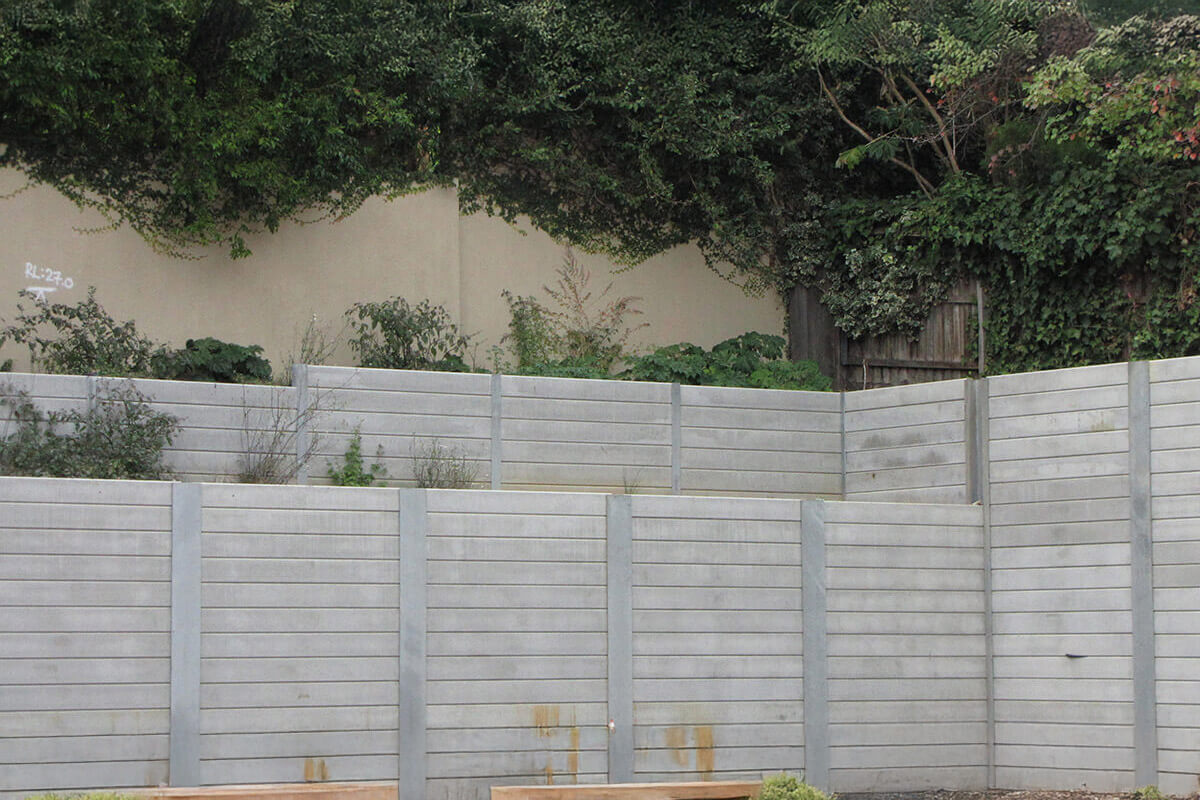
 For Australian construction professionals, landscape architects, and project managers, retaining walls are rarely a small, simple job. Once you move past the standard residential backyard wall and into commercial territory—handling heavy embankments, managing significant site level changes, or supporting public infrastructure—you need serious structural steel. This is where the heavy-duty Universal Column (UC) sections truly earn their stripes.
At RW Steel Victoria, we understand that commercial projects demand not just strength, but verified, engineer-approved integrity. You need posts that can handle extreme lateral pressure, and that often means moving up to the bigger, denser UCs like the 200UC46.2, 200UC59.9, and the formidable 250UC72.9.
Choosing these high-strength posts isn’t about overkill; it’s about compliance, safety, and longevity. Getting this choice right protects your entire investment and ensures the structure stands firm for decades.
Why ‘Heavier’ is Always Better for Commercial Applications
When selecting retaining wall steel, the most critical number is the weight per metre (kg/m). This figure is the quickest indicator of how much steel mass is in the cross-section, which directly correlates to the post’s resistance to bending and buckling—its stiffness.
For high walls (typically 2 metres and above) or walls supporting massive loads (like car parks or neighbouring buildings), the pressure exerted by the soil, water, and surcharges is immense. Standard residential posts simply won’t cut it. This is why we rely on heavy-duty UCs:
- Superior Bending Resistance: The larger the UC section, the greater its Moment of Inertia ($I$)—a property vital for resisting bending under load. A small change in the UC’s depth or flange width results in a massive increase in its strength.
- Engineering Compliance: Local councils and structural engineers will almost always specify these heavier grades for large-scale projects to meet stringent Australian structural standards.
- Long-Term Stability: In commercial environments, wall failure is not just an inconvenience; it’s a massive financial and safety liability. Heavy UCs provide the necessary safety margin.
Decoding the Heavy-Duty UC Sections
When your engineer’s drawings arrive, you’ll see specific notations like 200UC46.2. These numbers aren’t random; they tell you everything you need to know about the post’s dimensions and strength:
- The First Number (e.g., 200): This is the nominal depth of the section in millimetres (approx. 200mm).
- The Letters (UC): Stands for Universal Column, indicating its almost square, H-shaped profile, which offers balanced strength.
- The Last Number (e.g., 46.2): This is the weight in kilograms per metre (46.2 kg/m). This is the key structural metric.
Let’s look at three common heavy-duty champions used across commercial sites in Melbourne and regional Victoria:
1. The Workhorse: 200UC46.2
The 200UC46.2 is often the entry point into heavy-duty retaining wall systems. It’s a robust section used frequently for mid-height commercial walls or areas with moderate to heavy soil pressure.
- It offers a significant jump in capacity compared to standard 150UC posts.
- It is well-suited for holding 100mm or 120mm sleepers.
- It strikes a solid balance between structural performance and material cost for many medium-scale commercial landscaping jobs.
2. The Mid-Range Specialist: 200UC59.9
If your wall height increases, or if the soil conditions are particularly challenging—think reactive clay or a site with poor drainage—you may need to step up to the 200UC59.9.
- This post shares the same nominal depth (200mm) but, at nearly 60 kg/m, features thicker flanges and a thicker web.
- This extra steel dramatically increases the stiffness, making it ideal for managing the increased bending moments associated with taller walls (over 2.5 metres) or walls that support vehicular traffic.
3. The Structural Powerhouse: 250UC72.9
For maximum structural integrity in large-scale civil or commercial applications, the 250UC72.9 is your top-tier choice. This beam is commonly found in bridge abutments, major highway works, and retaining walls over 3 metres high.
- The ‘250’ series increases the depth of the post, adding another layer of structural stiffness.
- At almost 73 kg/m, it is built to withstand extreme pressure and high surcharge loads that would crush smaller steel sections.
- When a wall’s failure could have catastrophic consequences, engineers specify the 9 for absolute peace of mind.
Final Word: Engineering is Not Negotiable
In commercial steel retaining wall projects, the engineer’s specification is gospel. Unlike a simple residential job where a DIYer might ‘oversize’ a post for safety, commercial projects require precise calculations that take into account soil type, drainage, wall height, and surcharge.
The primary role of a trusted steel supplier like RW Steel Victoria is to stock and precisely cut these specialised beams—including the 150UC37.2, which bridges the gap between residential and heavy commercial work—to your exact project specifications. When dealing with the heavy lifters, there is no room for error. Always ensure your supplier can provide quality, galvanised steel cut accurately to the millimetre, ready for your critical structural installation.